Project Overview
The Crime Detection and Prevention System (CDPS) is an advanced AI-powered security solution designed to identify potential criminal activities in real-time and provide early warning systems to prevent incidents before they occur. This comprehensive system combines computer vision, natural language processing, and behavioral analytics to create a multi-layered security approach.
Key Features
- • Real-time threat detection and analysis
- • Behavioral pattern recognition
- • Multi-modal data processing (video, audio, text)
- • Predictive risk assessment
- • Automated alert system
- • Integration with existing security infrastructure
Technologies
- • Python & TensorFlow/PyTorch
- • OpenCV for computer vision
- • BERT for natural language processing
- • PostgreSQL for data storage
- • Redis for real-time processing
- • Docker & Kubernetes for deployment
System Architecture
Vision Processing
Real-time video analysis and object detection for threat identification
AI Engine
ML models for behavioral analysis and risk assessment
Alert System
Automated notifications and prevention protocols
System Flowchart
High-level processing flow from data ingestion to alerting and operator action.
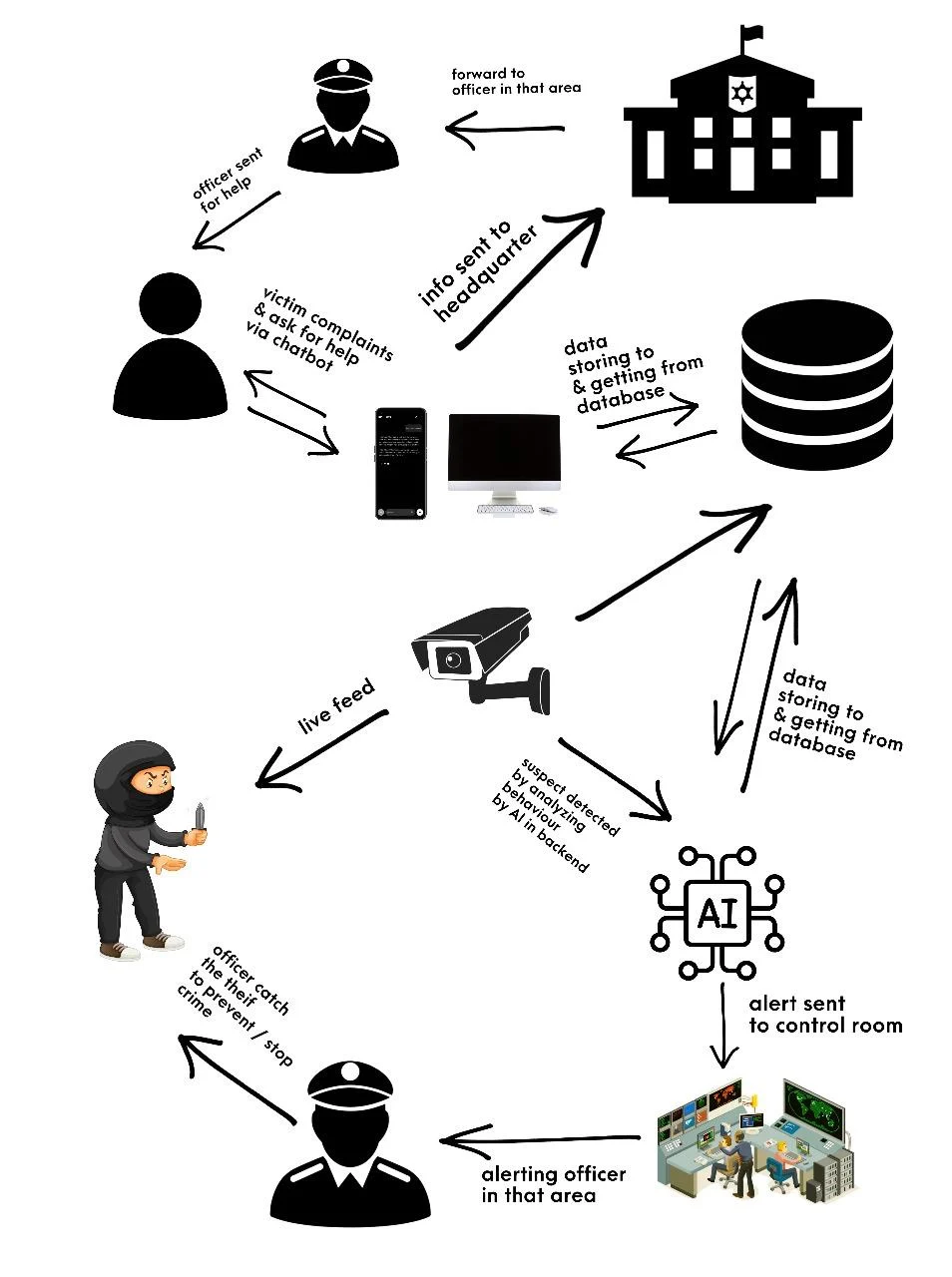
Note: Diagram is illustrative and may omit environment-specific details.
Core Features
Real-time Detection
Advanced computer vision algorithms detect suspicious activities, weapons, and behavioral anomalies in real-time video streams.
Risk Assessment
Multi-factor risk scoring system that combines visual cues, behavioral patterns, and contextual data to assess threat levels.
NLP Analysis
Natural language processing for emergency call analysis, sentiment detection, and automated incident categorization.
Alert System
Intelligent alerting system with priority-based notifications and automated response protocols for security personnel.
Technical Implementation
Model Architecture
- YOLOv8/Detectron2 for object detection
- SlowFast/TSN for action recognition
- BERT transformers for NLP tasks
- Gradient-boosted trees for risk scoring
Performance Metrics
Use Cases & Applications
Smart Cities
Municipal surveillance systems for public safety monitoring and incident prevention in urban environments.
Corporate Security
Enterprise security solutions for offices, campuses, and facilities with automated threat detection and response.
Law Enforcement
Support tools for police departments with real-time crime analysis and predictive policing capabilities.
Results & Impact
Quantitative Results
- 92% accuracy in violence detection
- 37% reduction in false positives
- Sub-1.2 second alert latency
- 99.9% system uptime
Business Impact
- Improved public safety response times
- Reduced security operational costs
- Faster incident detection and response
- Data-driven crime prevention strategies
Future Enhancements
Planned Features
- • Multi-camera re-identification and tracking
- • Graph neural networks for incident correlation
- • Advanced predictive analytics for crime hotspots
- • Integration with IoT sensor networks
Technical Improvements
- • Edge computing deployment for faster processing
- • Privacy-preserving federated learning
- • Continual learning with model adaptation
- • Enhanced explainable AI for decision transparency